Krasi Village and the Legendary Plane Tree of Crete


Nestled on the slopes of Mount Selena, near Malia, Krasi is one of those Cretan mountain villages that never rushed to modernize—and that is precisely its strength. Surrounded by oak forests, fertile land, and grazing livestock, it has long sustained itself the traditional way: soil, animals, seasons, and patience. Archaeological findings suggest prehistoric habitation, while the village itself took shape during Byzantine times and remained largely untouched during Ottoman rule. History here is not displayed; it is lived quietly.
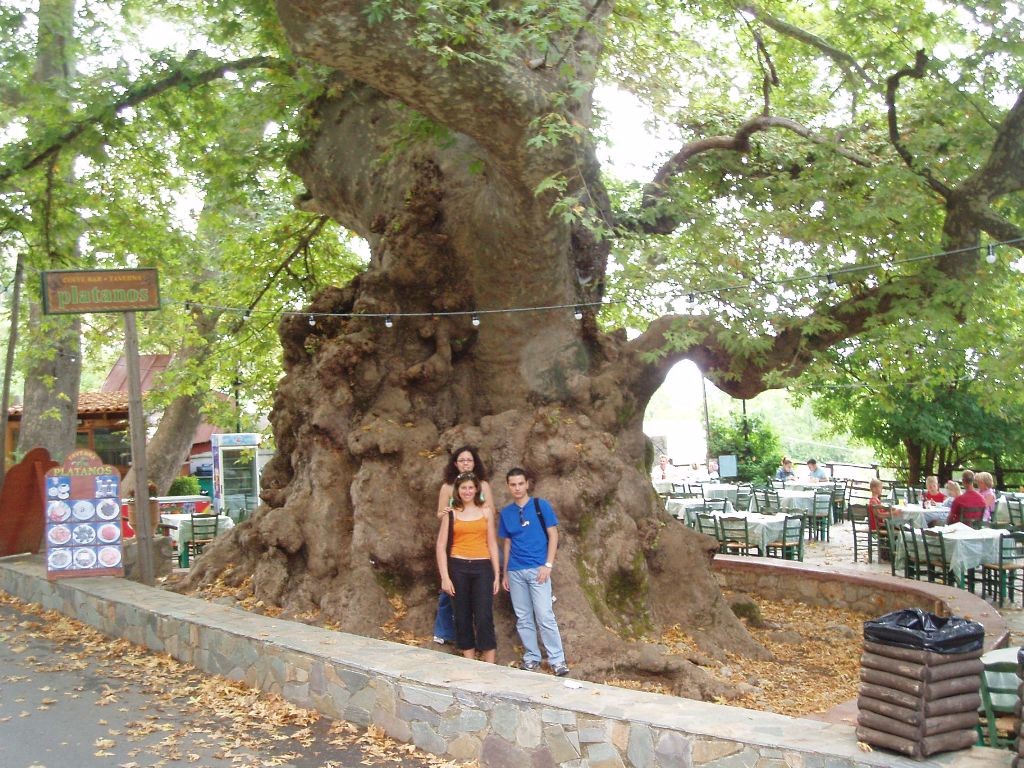
At the heart of the village stands its most celebrated landmark, the monumental plane tree known locally as “Gero-Platanos.” Estimated to be over a thousand years old—with a trunk circumference exceeding 20 meters—it ranks among the largest plane trees in Europe. Officially designated a preserved natural monument, it is carefully maintained to prevent disease and structural damage. Writers, artists, and thinkers have long sought its shade, most notably Nikos Kazantzakis, who spent time here writing and gathering fellow intellectuals, giving rise to what locals still call the “literary company of Krasi.”
Just above the village lies “Megali Vrysi,” a striking 19th-century stone aqueduct fed by springs from Mount Selena. Built by craftsmen from nearby Mochos, it remains one of Crete’s most impressive rural water systems. Two vaulted fountains—Pano Vrisi and Kato Vrisi—once served as communal gathering points where daily life unfolded. Today, Krasi retains its character: wood-fired bread, local cheese, slow coffee, and raki offered without ceremony. Visitors do not come for spectacle. They come for scale, silence, and the rare feeling that time here still moves at its proper pace.